AI automation and business process automation for UK businesses
Stop doing the same job twice
Every business has work that runs the same way every single time, and someone doing it by hand. We map it, automate it inside the systems you already use, and give you the hours back.
Some jobs need an automation. Some need an agent.
We build both, and the honest answer is that it depends on the job. Automation is cheaper, faster and more predictable, so wherever it will do the work properly, that is what we use.
An automation
Runs the exact steps you decided, in the same order, every time. Nothing to think about, so nothing to get wrong. Cheap to run, quick to build and it never has an off day.
This is what most businesses need first.
An AI agent
Reads a situation, decides what is needed and uses your data to finish the job. Slower to build and more to run, but it copes with the exceptions an automation cannot.
More on our AI agents page.
In practice
Most of what we build is a mix. An automation catches the job and does the certain parts, an agent handles the bit that needs judgement, and a person approves anything that matters.
We work out the split during the blueprint.
We will always recommend the cheapest thing that does the job properly.
Watch a job collapse from hours to minutes
These are real processes we automate for UK businesses. Pick one and watch the manual steps fold away, leaving only the parts that still need a person.
Illustrative examples based on processes we see in most businesses. Step counts and timings are conservative estimates, not results from a specific client.
Automation for every part of your business
Most businesses start with one department, prove it, then roll out. Pick a department to see what we automate most often, what it plugs into, and what changes.
If your business has one of these problems, automation pays for itself
Industry matters less than bottleneck. Find the one that sounds like your week.
You quote or estimate a lot
Every quote takes a skilled person hours, and the slow ones lose the job to whoever answered first. This is where automation pays for itself fastest, and it is where most of our clients start.
Builders · installers · fabricators · agencies · manufacturersYou process orders by hand
Orders arrive as emails, PDFs and calls, and somebody rekeys every one.
Distributors · wholesalers · ecommerceYour inbox runs the business
Everything lands in one place, and things get missed on busy days.
Service · property · professional servicesYou book appointments all day
Someone spends their life arranging, confirming and rearranging.
Clinics · salons · garages · tradesYour data lives in six places
Accounts here, CRM there, spreadsheets everywhere, and nobody trusts the numbers.
Any business past about ten peopleYou hire and onboard often
Screening, scheduling and induction eat weeks that nobody has.
Logistics · hospitality · care · constructionYour automations run inside the software
you already use
No new platform and nothing ripped out. If it has an API, we can usually connect it.
We use the leading automation and orchestration platforms behind the scenes, and pick per job rather than tying you to one vendor. If a better tool arrives next year, we move you to it.
From first conversation to work running itself
No six-month discovery phase and no strategy deck that sits in a drawer. Every stage ends with something you can hold, and your first automation is running inside month one.
The blueprint

Two to three days of senior time inside your business. We sit with the people doing the work, record their screens, and map how a job really travels from enquiry to cash.
Your first automation goes live

We do not build for six months and hope. We take the single best opportunity from the blueprint and put it into production, in your systems, on your data, with the rules agreed with you.
Roll it out further

With one automation proving itself, we work down the roadmap. More processes, deeper integrations, dashboards so you can see what is running, and AI added only where a fixed path will not do.
Run, improve and hand over
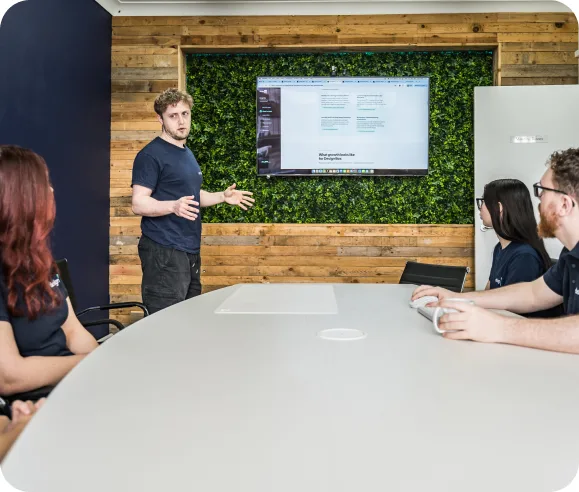
Automations break quietly. An API changes, a form field moves, a supplier alters their template, and your business does not stand still either. We monitor, fix and extend them, train your team, and document everything.
94%
less time on the jobs below
Across the six processes in the simulator above, the average is a 94% cut in hands-on time. A person still handles the exceptions.
You read it, change a line, send it
You approve the one line that needs a decision
You make the two calls that need a voice
You set the credit limit and say hello
You interview the four on the shortlist
You read two pages and change what you disagree with
Estimates for typical processes, not results from a specific client. What matters is not the exact number, it is that the person who used to spend their week on this now spends it on work that needs a person.
Two ways to work with us
For proving it in one part of the business before rolling out.
For rolling automation across the business, with several builds running at once.
Three-month minimum, then rolling and cancellable with 30 days. Model and token costs sit on your own account, quoted up front, and are usually a small fraction of the savings.
Compare this with hiring in-houseOne automation engineer costs about £99,070 in year one. See the full breakdown↓
This is the comparison worth doing, because it is the real alternative. Figures below are for one mid-level automation engineer, using current UK salary ranges and 2026/27 employer rates.
- Three to six months to hire, assuming you find the right one
- That buys roughly 225 working days once holiday and average sickness come out, so about £440 for every day they are at their desk
- One person, one skill set, and nobody covering when they are off
- No quality control except their own
- And they can hand in their notice
- Starts in weeks, not months
- A strategist, an account manager, a project manager and build capacity
- No holiday gaps, no sick days and no notice periods
- Quality control built into every single build
- A company standing behind the work, not one employee
Salary range from current UK market data. Employer national insurance and pension at 2026/27 rates, shown before any Employment Allowance, which most businesses with existing staff have already used elsewhere. Recruitment at a conservative 10%. Every figure is an estimate to make the comparison honest, not a quote.
Both are ongoing, both put your first automation live in month one, and both are run through a designbox account manager who knows your business. Prices exclude VAT.
The AI blueprint
Nobody should automate anything before somebody has properly understood how the work is really done. So that is what we do first.
You can skip it if your processes are already documented and your data is clean. In almost every business we look at, they are not. Not ready for a paid blueprint? Start with our free AI strategy overview.
Even if you never automate a thing with us, you finish with your business properly documented for the first time.
Why designbox
Plenty of people are selling AI who have never run a business. We have, from Essex, for over a decade.
You get people, not a portal
One account manager who knows your business and who you can actually ring. You never explain yourself twice.
We build the systems this runs inside
Websites, stores, CRMs and reporting are our day job. Most automation firms can only work on top of whatever you already have.
Ten years of being accountable
Cyber Essentials Plus certified, a decade of building and running business-critical systems, and clients we started with years ago. AI is new. Answering for the outcome is not.
We will tell you when it is no
Some processes should not be automated and some businesses are not ready. The blueprint exists so we can say so early.

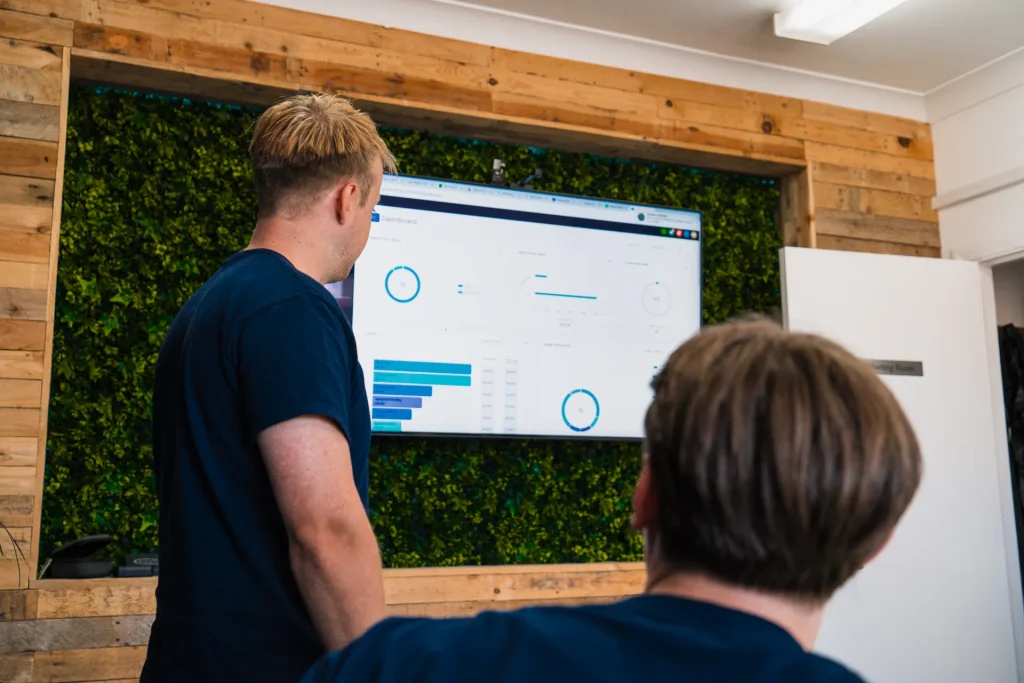

Your data, your rules, your systems
Two questions come up in every single conversation: what happens to our data, and what happens if we leave. Here are both answers up front.
You own everything we build
No lock-in and no hostage-taking. If we are worth keeping, it will be because the work is good.
Security and control
Where AI is involved, the model and processing arrangements are covered in writing before anything touches live data, and we go through them in the blueprint.
Automation,
answered honestly
Can’t see yours? Ask us anything on a quick call, no obligation.
What counts as an automation?
How is this different from Zapier or Make?
Where does the AI part come in?
Do we need to change our software?
What happens when something breaks?
Are we replacing people with this?
How quickly will something be running?
Do we need technical people on our side?
What does it cost?
Do we own what you build?
What if a process changes?
Should we be doing automation or AI agents?
Let’s find the work your business should stop doing by hand
Thirty minutes, no hard sell, and an honest answer either way.
